About Damon Chetson
About Catherine Winter

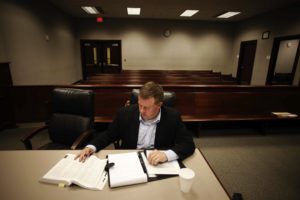
Attorney Damon Chetson (contact him at damon@chetson.com) represents people charged with serious and minor crimes in Raleigh and the surrounding Research Triangle. He maintains an active state and federal criminal law practice, and is admitted to practice before the state courts of North Carolina and the federal courts of the Eastern District of North Carolina.
A graduate of the University of North Carolina Law School, Mr. Chetson defends people who have been charged with crimes including drug traffickingDrug trafficking is the possession, sale, or distribution of larger quantities of certain controlled substances. In North Carolina, all drug trafficking laws have mandatory minimum sentences. and related drug crimes, including possession, manufacture, and sale and distribution. He has represented clients in federal court who have been accused of involvement with drug traffickingDrug trafficking is the possession, sale, or distribution of larger quantities of certain controlled substances. In North Carolina, all drug trafficking laws have mandatory minimum sentences. cartels, and clients in state court who have been charged with a range of drug crimes, from possession to trafficking.
Mr. Chetson also represents people charged with sex-related crimes, including sexual assault, rape, and pornography crimes. His background and knowledge of technological issues, including how data is stored and transmitted on the Internet, makes him well equipped to represent people charged with cyber-related crimes, including the possession and distribution of prohibited pornography.
An important part of Mr. Chetson’s practice involves trial work. While only a tiny percentage of cases in the United States actually reach trial, Mr. Chetson believes that clients deserve an attorney who isn’t reluctant or afraid to argue the case before a juryA jury may be either a grand jury or a petit jury. A grand jury is a jury that determines whether there is probable cause to believe the defendant committed a crime. The result is an indictmentAn indictment is a finding by a grand jury that there is probable cause to believe the defendant committed a crime. An indictment is not a finding of guilt. An indictment, rather, is a method by which a prosecutor moves a case into Superior Court for resolution by plea or trial by jury. that sends the case into Superior Court, perhaps for a jury trial.
A petit jury or simply a jury is the jury of 12 people who have been selected to hear and render a verdict in a case. trial. In September 2011, he took a DWIA DWI is a Driving While Impaired offense. It is more commonly referred to as drunk driving. In North Carolina, the term DWI is used. In other states, the terms DUI or OUI may be used. North Carolina's DWI is a misdemeanor, punishable by up to three years in jail. to juryA jury may be either a grand jury or a petit jury. A grand jury is a jury that determines whether there is probable cause to believe the defendant committed a crime. The result is an indictmentAn indictment is a finding by a grand jury that there is probable cause to believe the defendant committed a crime. An indictment is not a finding of guilt. An indictment, rather, is a method by which a prosecutor moves a case into Superior Court for resolution by plea or trial by jury. that sends the case into Superior Court, perhaps for a jury trial.
A petit jury or simply a jury is the jury of 12 people who have been selected to hear and render a verdict in a case. trial, securing a not-guilty verdict in under an hour of deliberation. In July 2011, he won a second DWIA DWI is a Driving While Impaired offense. It is more commonly referred to as drunk driving. In North Carolina, the term DWI is used. In other states, the terms DUI or OUI may be used. North Carolina's DWI is a misdemeanor, punishable by up to three years in jail. juryA jury may be either a grand jury or a petit jury. A grand jury is a jury that determines whether there is probable cause to believe the defendant committed a crime. The result is an indictmentAn indictment is a finding by a grand jury that there is probable cause to believe the defendant committed a crime. An indictment is not a finding of guilt. An indictment, rather, is a method by which a prosecutor moves a case into Superior Court for resolution by plea or trial by jury. that sends the case into Superior Court, perhaps for a jury trial.
A petit jury or simply a jury is the jury of 12 people who have been selected to hear and render a verdict in a case. trial after just 10 minutes of deliberation.
Mr. Chetson’s belief in the trial system comes from his experience early in law school when he served as a law clerkLorrin Freeman is the elected Clerk of Superior CourtSuperior Court is the higher of the two levels of trial court in North Carolina. Felonies may be resolved in Superior Court by pleaA plea agreementA plea agreement is usually a negotiated agreement between the defendant (through his lawyer) and the prosecution where the defendant agrees to plead guilty in exchange for some benefit, including, but not limited to, a reduced sentence or a reduction of charges.
An Alford Plea is a guilty plea with all of the benefits and consequences of a guilty plea, but where the defendant does not admit personal guilt. is usually a negotiated agreement between the defendant (through his lawyer) and the prosecution where the defendant agrees to plead guilty in exchange for some benefit, including, but not limited to, a reduced sentence or a reduction of charges.
An Alford Plea is a guilty plea with all of the benefits and consequences of a guilty plea, but where the defendant does not admit personal guilt., or trial. Misdemeanor convictions may be appealed to Superior Court for juryA jury may be either a grand jury or a petit jury. A grand jury is a jury that determines whether there is probable cause to believe the defendant committed a crime. The result is an indictmentAn indictment is a finding by a grand jury that there is probable cause to believe the defendant committed a crime. An indictment is not a finding of guilt. An indictment, rather, is a method by which a prosecutor moves a case into Superior Court for resolution by plea or trial by jury. that sends the case into Superior Court, perhaps for a jury trial.
A petit jury or simply a jury is the jury of 12 people who have been selected to hear and render a verdict in a case. trial. for Wake County. The Clerk of Superior CourtSuperior Court is the higher of the two levels of trial court in North Carolina. Felonies may be resolved in Superior Court by pleaA plea agreementA plea agreement is usually a negotiated agreement between the defendant (through his lawyer) and the prosecution where the defendant agrees to plead guilty in exchange for some benefit, including, but not limited to, a reduced sentence or a reduction of charges.
An Alford Plea is a guilty plea with all of the benefits and consequences of a guilty plea, but where the defendant does not admit personal guilt. is usually a negotiated agreement between the defendant (through his lawyer) and the prosecution where the defendant agrees to plead guilty in exchange for some benefit, including, but not limited to, a reduced sentence or a reduction of charges.
An Alford Plea is a guilty plea with all of the benefits and consequences of a guilty plea, but where the defendant does not admit personal guilt., or trial. Misdemeanor convictions may be appealed to Superior Court for juryA jury may be either a grand jury or a petit jury. A grand jury is a jury that determines whether there is probable cause to believe the defendant committed a crime. The result is an indictmentAn indictment is a finding by a grand jury that there is probable cause to believe the defendant committed a crime. An indictment is not a finding of guilt. An indictment, rather, is a method by which a prosecutor moves a case into Superior Court for resolution by plea or trial by jury. that sends the case into Superior Court, perhaps for a jury trial.
A petit jury or simply a jury is the jury of 12 people who have been selected to hear and render a verdict in a case. trial., among other duties, maintains court records and facilitates the management of the Wake County court system. at the Wake County Public DefenderA court appointed lawyer is a lawyer appointed by the Court (sometimes via the Public Defender Office) to represent an individual in court. Only indigent (poor) people qualify for a court appointed lawyer.
A public defender is a lawyer who is employed by the Public Defender Office and who only represents indigent (poor) clients.. In that capacity, he helped identify crucial alibi evidence on the morning of trial that led to a “Not Guilty” verdict for a client charged with Robbery with a Dangerous Weapon.
In December 2010, as second chair in another robbery and kidnapping seven-day trial in Wake County, Mr. Chetson and his co-counsel were able to win a “Not Guilty” verdict to eight counts of robbery and kidnapping that could’ve resulted in a 90 year prisonA prison is a facility, operated by the Department of CorrectionsA prison is a facility, operated by the Department of Corrections in North Carolina or the Bureau of PrisonsA prison is a facility, operated by the Department of Corrections in North Carolina or the Bureau of Prisons in the federal system, where an offender is sent to serve an active prison sentence of some length. in the federal system, where an offender is sent to serve an active prison sentence of some length. in North Carolina or the Bureau of PrisonsA prison is a facility, operated by the Department of Corrections in North Carolina or the Bureau of Prisons in the federal system, where an offender is sent to serve an active prison sentence of some length. in the federal system, where an offender is sent to serve an active prison sentence of some length. sentence for the client.
Where trial is not the best route, Mr. Chetson is frequently able to negotiate pleaA plea agreementA plea agreement is usually a negotiated agreement between the defendant (through his lawyer) and the prosecution where the defendant agrees to plead guilty in exchange for some benefit, including, but not limited to, a reduced sentence or a reduction of charges.
An Alford Plea is a guilty plea with all of the benefits and consequences of a guilty plea, but where the defendant does not admit personal guilt. is usually a negotiated agreement between the defendant (through his lawyer) and the prosecution where the defendant agrees to plead guilty in exchange for some benefit, including, but not limited to, a reduced sentence or a reduction of charges.
An Alford Plea is a guilty plea with all of the benefits and consequences of a guilty plea, but where the defendant does not admit personal guilt. agreements with the District AttorneyA District Attorney is the represented of the State, usually elected by the people of a judicial district, to prosecute crimes on behalf of the State. The Wake County District Attorney is Colon Willoughby, Jr.
A District Attorney usually has a staff, including assistant district attorneys who are the actual prosecutors who handle most of the day-to-day caseload. or United States Attorney that can greatly reduce the punishment. In the federal system, he has experience with 5k1.1A defendant may reduce penalties or avoid convictionA conviction is a formal finding by a court - either following a trial by a judge or jury or following the entry of a pleaA plea agreementA plea agreement is usually a negotiated agreement between the defendant (through his lawyer) and the prosecution where the defendant agrees to plead guilty in exchange for some benefit, including, but not limited to, a reduced sentence or a reduction of charges.
An Alford Plea is a guilty plea with all of the benefits and consequences of a guilty plea, but where the defendant does not admit personal guilt. is usually a negotiated agreement between the defendant (through his lawyer) and the prosecution where the defendant agrees to plead guilty in exchange for some benefit, including, but not limited to, a reduced sentence or a reduction of charges.
An Alford Plea is a guilty plea with all of the benefits and consequences of a guilty plea, but where the defendant does not admit personal guilt. - of guilt. altogether by providing authorities with information related to criminal activity. Substantial assistance is a common feature of drug cases. Substantial assistance should only be given with the advice of a defense lawyer, since cooperationA defendant may reduce penalties or avoid convictionA conviction is a formal finding by a court - either following a trial by a judge or jury or following the entry of a pleaA plea agreementA plea agreement is usually a negotiated agreement between the defendant (through his lawyer) and the prosecution where the defendant agrees to plead guilty in exchange for some benefit, including, but not limited to, a reduced sentence or a reduction of charges.
An Alford Plea is a guilty plea with all of the benefits and consequences of a guilty plea, but where the defendant does not admit personal guilt. is usually a negotiated agreement between the defendant (through his lawyer) and the prosecution where the defendant agrees to plead guilty in exchange for some benefit, including, but not limited to, a reduced sentence or a reduction of charges.
An Alford Plea is a guilty plea with all of the benefits and consequences of a guilty plea, but where the defendant does not admit personal guilt. - of guilt. altogether by providing authorities with information related to criminal activity. Substantial assistance is a common feature of drug cases. Substantial assistance should only be given with the advice of a defense lawyer, since cooperation given without a defense lawyer's input may not be honored by police or prosecutors when the case is resolved. given without a defense lawyer's input may not be honored by police or prosecutors when the case is resolved. “substantial assistanceA defendant may reduce penalties or avoid convictionA conviction is a formal finding by a court - either following a trial by a judge or jury or following the entry of a pleaA plea agreementA plea agreement is usually a negotiated agreement between the defendant (through his lawyer) and the prosecution where the defendant agrees to plead guilty in exchange for some benefit, including, but not limited to, a reduced sentence or a reduction of charges.
An Alford Plea is a guilty plea with all of the benefits and consequences of a guilty plea, but where the defendant does not admit personal guilt. is usually a negotiated agreement between the defendant (through his lawyer) and the prosecution where the defendant agrees to plead guilty in exchange for some benefit, including, but not limited to, a reduced sentence or a reduction of charges.
An Alford Plea is a guilty plea with all of the benefits and consequences of a guilty plea, but where the defendant does not admit personal guilt. - of guilt. altogether by providing authorities with information related to criminal activity. Substantial assistance is a common feature of drug cases. Substantial assistance should only be given with the advice of a defense lawyer, since cooperationA defendant may reduce penalties or avoid convictionA conviction is a formal finding by a court - either following a trial by a judge or jury or following the entry of a pleaA plea agreementA plea agreement is usually a negotiated agreement between the defendant (through his lawyer) and the prosecution where the defendant agrees to plead guilty in exchange for some benefit, including, but not limited to, a reduced sentence or a reduction of charges.
An Alford Plea is a guilty plea with all of the benefits and consequences of a guilty plea, but where the defendant does not admit personal guilt. is usually a negotiated agreement between the defendant (through his lawyer) and the prosecution where the defendant agrees to plead guilty in exchange for some benefit, including, but not limited to, a reduced sentence or a reduction of charges.
An Alford Plea is a guilty plea with all of the benefits and consequences of a guilty plea, but where the defendant does not admit personal guilt. - of guilt. altogether by providing authorities with information related to criminal activity. Substantial assistance is a common feature of drug cases. Substantial assistance should only be given with the advice of a defense lawyer, since cooperation given without a defense lawyer's input may not be honored by police or prosecutors when the case is resolved. given without a defense lawyer's input may not be honored by police or prosecutors when the case is resolved.” pleaA plea agreementA plea agreement is usually a negotiated agreement between the defendant (through his lawyer) and the prosecution where the defendant agrees to plead guilty in exchange for some benefit, including, but not limited to, a reduced sentence or a reduction of charges.
An Alford Plea is a guilty plea with all of the benefits and consequences of a guilty plea, but where the defendant does not admit personal guilt. is usually a negotiated agreement between the defendant (through his lawyer) and the prosecution where the defendant agrees to plead guilty in exchange for some benefit, including, but not limited to, a reduced sentence or a reduction of charges.
An Alford Plea is a guilty plea with all of the benefits and consequences of a guilty plea, but where the defendant does not admit personal guilt. agreements, 3553(f) “safety valve” reductions, and other avenues through the Sentencing Guidelines to help reduce punishments. In the state system, Mr. Chetson can sometimes arrange for deferral or diversion agreements, which allow his clients to undergo treatment or community service instead of a convictionA conviction is a formal finding by a court - either following a trial by a judge or jury or following the entry of a pleaA plea agreementA plea agreement is usually a negotiated agreement between the defendant (through his lawyer) and the prosecution where the defendant agrees to plead guilty in exchange for some benefit, including, but not limited to, a reduced sentence or a reduction of charges.
An Alford Plea is a guilty plea with all of the benefits and consequences of a guilty plea, but where the defendant does not admit personal guilt. is usually a negotiated agreement between the defendant (through his lawyer) and the prosecution where the defendant agrees to plead guilty in exchange for some benefit, including, but not limited to, a reduced sentence or a reduction of charges.
An Alford Plea is a guilty plea with all of the benefits and consequences of a guilty plea, but where the defendant does not admit personal guilt. - of guilt..
Because the criminal system can be frightening and lawyers usually speak in strange and confusing ways, Mr. Chetson knows that his clients need to have everything about their case carefully and easily explained. He’ll take time – as much as it requires – to communicate with you in plain speak about all of your options.
Back to Top
Catherine Winter (contact her at
cwinter@chetson.com), the firm’s vice president of operations, guides the strategic planning of the firm, including spearheading efforts to provide outstanding levels of service to the firm’s clients. Ms. Winter oversees the firm’s finances and marketing efforts, and ensures that the firm offers a high level outstanding care and legal services even as the firm grows into new geographic and practice areas.
Ms. Winter was previously a manager with Intel, the world’s leading provider of computer microchips, and a director of organizational development at Banner Health, one of the leading health care and hospital networks in the western United States. In addition to her work with the firm, she is a business consultant with a leading information technology services provider.
Ms. Winter earned her doctorate in business administration from Rushmore University, and her undergraduate and masters degrees respectively from Xavier University (Cincinnati, Ohio) and the State University of New York (SUNY-Albany).
In her free time, Ms. Winter trains horses and rides in the hunter and jumper disciplines in equestrian sports. She currently owns two horses which she shows regularly in the North Carolina amateur circuit.
Back to Top